Blog

  • Male Infertility – A Short Story That Represents Many Patients

    When 34-year-old Sameer came to MHRT Hospitals, he was nervous. He had been married for four years and assumed infertility was a “female issue.” A semen analysis showed low motility, and his confidence dropped.

    But with small lifestyle changes, supplements, and ICSI, Sameer and his wife conceived on their second IVF cycle. Their journey reflects what we see every day:


    Male infertility is common, treatable, and nothing to feel ashamed about.


    FAQs on Male Infertility

    Can male infertility be cured?
    Many causes can be treated, especially varicocele, hormonal imbalance, and lifestyle-related issues.

    Is IVF the only option?
    Not always. Depending on the severity, medications, IUI, or surgical correction may be enough.

    How long does treatment take?
    It varies from one month to several months based on the diagnosis.

    Can stress reduce sperm count?
    Yes. Stress hormones interfere with testosterone and sperm production.


    Why Choose MHR T Hospitals for Male Infertility?

    • Dedicated andrology specialists
    • Advanced semen analysis and DNA fragmentation facilities
    • Expertise in ICSI, micro-TESE, and advanced IVF techniques
    • Personalised treatment based on detailed diagnostics
    • Proven success with male factor infertility cases
    • Supportive counselling and guidance every step of the way

    Conclusion

    Male infertility is more common than most people realise, but the good news is that modern andrology offers highly effective and scientifically proven treatments. With accurate diagnosis, personalised care, and advanced technologies, most men can father biological children.

    MHR T Hospitals is committed to providing compassionate and evidence-based fertility care for men and couples seeking answers, hope, and results.

  • Low AMH Levels: Can I Still Get Pregnant? Causes, Treatment, and Success Rates at MHR T Hospitals

    One of the most common questions women ask today is:
    “My AMH is low. Can I still get pregnant?”

    With more women delaying pregnancy because of career, education, or personal choices, the Anti-Müllerian Hormone (AMH) test has become one of the most searched fertility topics in India. At MHR T Hospitals, we meet women every day who feel anxious after seeing a “low AMH” result on their report.

    This guide explains what AMH really means, how it affects fertility, and what treatment options can genuinely help you become a parent.


    What Is AMH?

    AMH stands for Anti-Müllerian Hormone.
    It is produced by the small follicles in your ovaries and tells us about your egg reserve.

    Think of AMH as a quantity indicator, not a quality indicator.
    You can still have good-quality eggs even with low AMH.


    What Is a Normal AMH Level?

    AMH levels vary by age, clinic, and test method, but the general ranges are:

    • Above 2.0 ng/ml – Good ovarian reserve
    • 1.0 to 2.0 ng/ml – Medium ovarian reserve
    • 0.5 to 1.0 ng/ml – Low ovarian reserve
    • Below 0.5 ng/ml – Very low ovarian reserve

    Many women panic when they read a “0.7” or “0.3”, but remember:

    Low AMH does not mean no pregnancy.
    It simply means you need a planned and timely fertility strategy.


    Why Does AMH Become Low?

    1. Age

    The biggest factor. Egg count decreases naturally after 30 and faster after 35.

    2. Genetics

    Some women are born with fewer egg follicles.

    3. Endometriosis

    Can affect ovarian reserve.

    4. Prior Ovarian Surgery

    Cyst removal or ovary-related surgeries may reduce AMH.

    5. Autoimmune or Medical Conditions

    Certain health issues affect egg reserve.

    6. Lifestyle Factors

    Smoking, stress, poor diet, obesity, and sleep issues may impact egg health over time.


    Symptoms of Low AMH

    Low AMH often has no symptoms, but a few signs may include:

    • Shorter menstrual cycles
    • Irregular periods
    • Difficulty conceiving
    • Poor response to fertility medications

    However, only a blood test can confirm AMH levels.


    Can You Get Pregnant Naturally With Low AMH?

    Yes, it is possible, especially if:

    • You are below 35
    • Your periods are regular
    • You ovulate normally

    But the window of opportunity is smaller, so early fertility planning is essential.

    Women with AMH around 0.5 to 1.0 ng/ml often conceive naturally with timely monitoring.


    Best Treatment Options for Low AMH at MHR T Hospitals

    1. Timed Intercourse or Ovulation Induction

    Useful for women with mildly low AMH who still ovulate regularly.


    2. IUI (Intrauterine Insemination)

    Suitable for younger women with low AMH but healthy tubes and normal sperm parameters.


    3. IVF (In Vitro Fertilisation)

    The most effective treatment because IVF can retrieve the available eggs in one cycle.

    Women with AMH as low as 0.3 or 0.4 often succeed with IVF, especially when treatment is not delayed.


    4. IVF With ICSI

    Recommended when the egg count is low but egg quality is still good.
    A single sperm is injected into the egg to maximise fertilisation.


    5. Segmented IVF Protocol

    Helps women with low AMH by reducing stress on the ovaries and improving embryo transfer outcomes.
    (We already wrote this blog earlier.)


    6. PRP, DHEA, and Egg-Quality Supplements

    Some women benefit from ovarian PRP, DHEA supplements, CoQ10, and antioxidant therapy.
    Effect varies by case, and decisions must be doctor-guided.


    7. Donor Egg IVF

    An excellent option for very low AMH or women above 40 who want high success rates.
    This is usually recommended only when all other options have been explored.


    What Are the Success Rates?

    Success depends on:

    • Age
    • AMH level
    • Egg quality
    • Lifestyle
    • Medical conditions

    On average:

    • Women under 35 with low AMH: good pregnancy potential with IVF
    • Women 35–40: success depends on prompt treatment and good embryo development
    • Women above 40: donor eggs may provide the best outcome

    At MHR T Hospitals, your specialist will give a customised success prediction after reviewing your hormone reports, scans, and medical history.


    A Real Patient Story

    Nazia, age 32, walked into MHRT Hospitals with an AMH of 0.4. She was convinced the report meant she could never become a mother.
    After evaluation, we put her on an optimised IVF protocol, focused on egg-quality improvement and precise medication timing.

    She conceived in her second IVF cycle.

    Low AMH did not stop her.
    It simply required the right plan and the right timeline.


    FAQs About Low AMH

    Can AMH be increased?
    AMH cannot be naturally “raised,” but egg quality can be improved.

    Is low AMH the same as infertility?
    No. Many women with low AMH get pregnant.

    Does low AMH affect egg quality?
    No. It affects quantity, not quality.

    How quickly should I act?
    Do not delay. Every month counts when AMH is low.


    Why Choose MHR T Hospitals for Low AMH Treatment?

    • Personalised IVF and ICSI protocols
    • Expertise in low-reserve and difficult-response cases
    • Fertility specialists with advanced training
    • State-of-the-art embryology labs
    • Complete transparency and emotional support

    Conclusion

    Low AMH is not the end of your fertility journey. With the right treatment strategy, timely planning, and personalised care, pregnancy is still very much possible. At MHR T Hospitals, we guide you step by step with clear information, scientific treatment, and compassionate support.

    Keywords: low AMH, AMH test, AMH level normal range, low AMH treatment, AMH and pregnancy, IVF for low AMH, AMH 0.5 chances, AMH improvement.

  • Preparing Body and Mind for IVF

    Embarking on an IVF journey is not only a medical process but also an emotional and physical commitment. Preparing well in advance can improve both the experience and the outcome. The goal is to create the healthiest environment – in body and mind – for conception and pregnancy.

    1. Focus on Nutrition
    A balanced diet rich in proteins, iron, calcium, and vitamins supports healthy egg and sperm production. Include plenty of fresh fruits, vegetables, whole grains, and water. Avoid processed foods, excessive sugar, and caffeine. A fertility-friendly diet nourishes the body and boosts hormonal balance.

    2. Maintain a Healthy Weight
    Being either underweight or overweight can affect fertility and response to treatment. Gentle exercise such as walking, yoga, or stretching can improve blood flow, reduce stress, and prepare the body for the upcoming procedures.

    3. Avoid Smoking and Alcohol
    Both smoking and alcohol can negatively impact fertility and embryo health. It is best to stop or limit these habits before starting IVF treatment to enhance success rates and overall well-being.

    4. Manage Stress and Sleep Well
    Emotional health plays a key role in fertility treatment. Practice relaxation techniques such as meditation, deep breathing, or spending quiet time with loved ones. Adequate sleep restores hormonal balance and improves the body’s ability to heal and respond positively to treatment.

    5. Build Emotional Support
    IVF can be emotionally demanding. Having a supportive partner, family member, or counselor to talk to makes a big difference. At our center, emotional well-being is treated as an essential part of care – because peace of mind matters as much as medical success.

    Preparing for IVF is about more than just physical readiness. It is about entering the process with hope, patience, and trust. A calm mind and a healthy body together create the best foundation for new life to begin.

  • IVF Process and Timeline Explained

    IVF Process and Timeline Explained

    Starting an IVF journey can feel overwhelming at first. Understanding how the process works and what to expect at each stage can make the experience smoother and less stressful. IVF, or In Vitro Fertilization, involves several carefully planned steps that work together to help couples achieve pregnancy.

    1. Consultation and Evaluation
    The process begins with a detailed consultation and medical evaluation. Tests are done to understand hormonal levels, egg reserve, sperm health, and the overall reproductive condition of both partners. Based on these results, a personalized treatment plan is designed.

    2. Ovarian Stimulation
    During this stage, medication is prescribed to stimulate the ovaries to produce multiple mature eggs. Regular scans and blood tests are done to monitor growth and ensure the right timing for egg retrieval.

    3. Egg Retrieval
    Once the eggs are ready, a minor procedure is performed to collect them. This is usually done under mild anesthesia and takes only a few minutes. The eggs are then carefully examined and prepared for fertilization in the laboratory.

    4. Fertilization and Embryo Culture
    The collected eggs are combined with sperm in a controlled environment. Fertilization occurs naturally, and the resulting embryos are closely monitored over the next few days to identify the healthiest ones for transfer.

    5. Embryo Transfer
    A selected embryo is gently placed into the uterus. This procedure is simple, usually painless, and does not require anesthesia. The remaining embryos, if any, can be frozen for future use.

    6. Pregnancy Test
    About two weeks after the embryo transfer, a blood test is done to confirm pregnancy. This waiting period can be emotionally intense, so emotional support and counseling are an important part of the care provided during this time.

    From start to finish, a typical IVF cycle takes about four to six weeks. Every patient’s journey may vary slightly depending on individual health conditions and response to treatment.

    At our center, we focus on making the process transparent, comfortable, and hopeful. IVF is not just about science – it is about turning dreams of parenthood into reality, step by step.

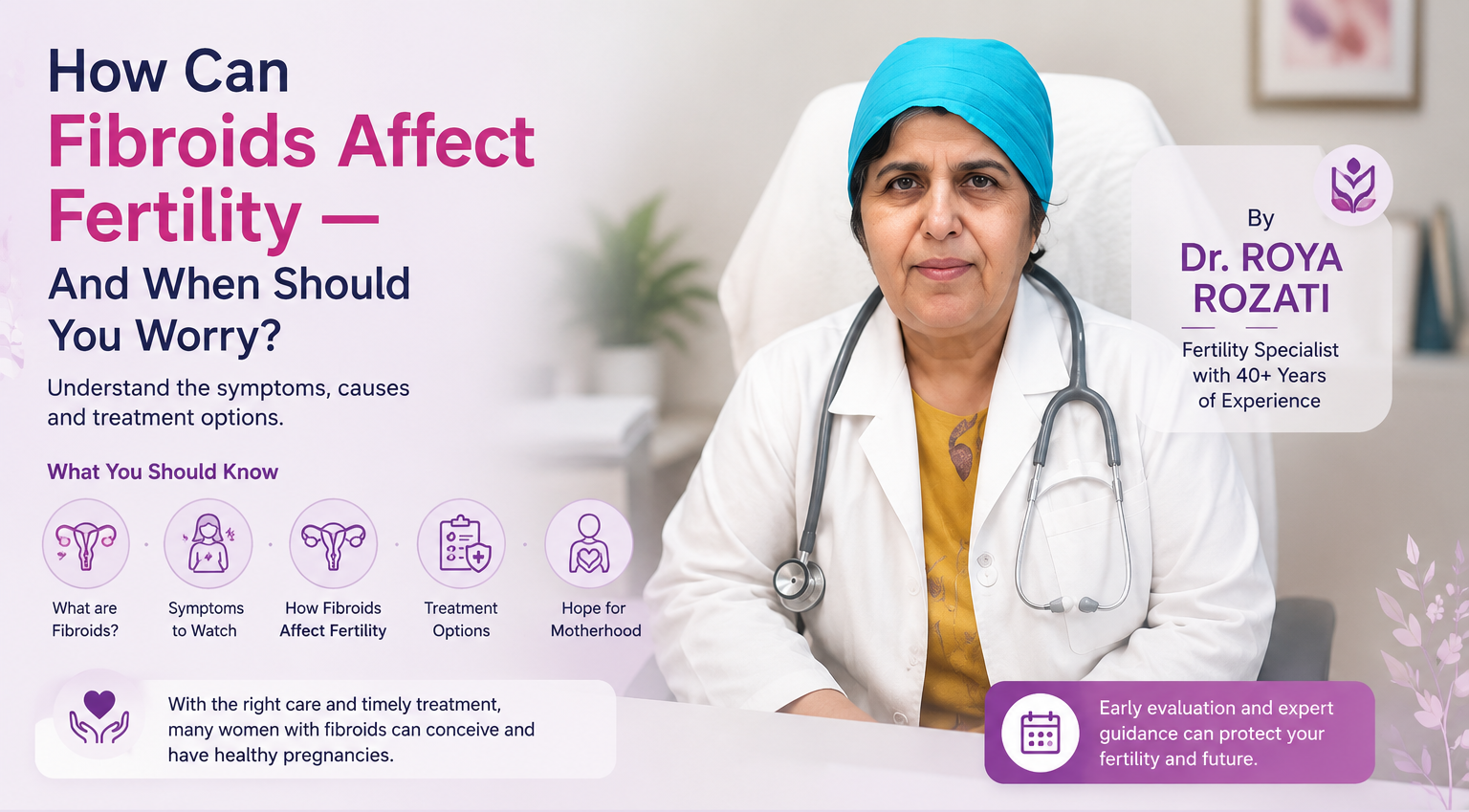
  • Choosing the Best Doctor for IVF – Explains Dr. Roya Rozati

    The decision to undergo IVF is a big step in a couple’s journey toward parenthood. It requires not only medical expertise but also emotional understanding and trust. Choosing the right fertility doctor can make all the difference between uncertainty and confidence.

    A good IVF specialist combines science with sensitivity. Look for a doctor who listens carefully, explains every step clearly, and takes the time to understand your medical history and emotional concerns. Every patient’s journey is unique, and the right doctor will personalize the treatment plan rather than follow a standard approach.

    Experience and success rates are important, but so is the environment where you are treated. A supportive team, transparent communication, ethical practices, and access to advanced technology all play a vital role in achieving the best outcome.

    At our center, we believe that fertility care should never feel mechanical. It should feel compassionate, private, and empowering. Our goal is to walk beside every couple from the first consultation to the moment they hold their baby in their arms.

    Choosing the right doctor is the first step toward making your dream of parenthood a reality.

    MHRT Hospitals is blessed to have Dr. Roya Rozati, with her distinguished achievements and care, to lead the team. To get in touch, call or WhatsApp 9849161421

  • When to Choose IVF or IUI

    Choosing between IVF (In Vitro Fertilization) and IUI (Intrauterine Insemination) can be a confusing decision for many couples trying to conceive. Both treatments are effective, but the right choice depends on the cause of infertility, age, and overall reproductive health.

    IUI is usually recommended as the first option for couples with mild fertility issues. It works best when the woman has open fallopian tubes, regular ovulation, and the partner’s sperm count is normal or only slightly low. IUI is also helpful in cases of unexplained infertility or when timing intercourse is difficult.

    IVF is often advised when other methods, including IUI, have not succeeded. It is the preferred option in cases of blocked fallopian tubes, severe sperm abnormalities, advanced maternal age, endometriosis, or when there is a need for genetic screening of embryos. IVF allows fertilization to take place outside the body, giving doctors more control and precision in selecting healthy embryos.

    At our center, every couple undergoes a detailed evaluation before a treatment plan is suggested. The goal is to choose a path that offers the best chance of pregnancy while ensuring comfort and emotional support at every stage.

    Infertility treatment is not one-size-fits-all. With the right approach and expert guidance, hope can be transformed into life.

  • IVF vs IUI – Which One To Choose – Explained

    For many couples, the journey to parenthood is not always simple. Infertility can be emotionally challenging, but modern science offers solutions that bring new possibilities and renewed hope.

    Two of the most effective treatments in assisted reproduction are IVF (In Vitro Fertilization) and IUI (Intrauterine Insemination). While both aim to help couples conceive, they differ in process, complexity, and success rates.

    IUI is a simpler and less invasive procedure where carefully prepared sperm is placed directly into the uterus at the time of ovulation. It is often the first step for couples with mild fertility challenges or unexplained infertility.

    IVF, on the other hand, involves retrieving eggs, fertilizing them with sperm in a laboratory, and transferring the healthiest embryo back into the uterus. IVF gives doctors the ability to monitor and select the most viable embryos, improving the chances of a successful pregnancy.

    At our center, we understand that every journey to parenthood is unique. With the right diagnosis, personalized care, and emotional support, conception becomes not just a medical achievement but a deeply human miracle.

    Whether it is IVF, IUI, or another advanced fertility treatment, our goal remains the same: to turn hope into life.

  • Is IVF Safe? Will IVF Work for Me? Dr Roya Rozati Explains What You Need to Know


    Introduction

    Many couples facing infertility ask two vital questions: “Is IVF safe?” and “Will IVF work for me?” These reflect deep concern and uncertainty—and they’re among the most searched queries on fertility. This post aims to provide clear, evidence-based answers, so you can move forward with confidence.

    1. Is IVF Safe?

    Yes—IVF is a well-established fertility treatment with decades of use and continuous advancements. Many myths persist, but medical evidence supports the safety of IVF when performed in credible clinics.

    • Clinics now commonly use single-embryo transfers, which significantly reduce the risk of multiple pregnancies without compromising success rates, making IVF safer for both mother and baby.
    • A nurse from India Today reiterates: “IVF is not unsafe, and the procedures used are safe and effective.”
    • However, because some centers operate without proper regulation or oversight, it’s vital to choose a clinic with proper infrastructure and ethical protocols. A recent UK report highlights that 73% of fertility patients use unproven “add-on” treatments—often with no evidence of benefit.

    2. Will IVF Work for Me?

    IVF success varies—nothing guarantees a baby, but there are trends and factors to guide expectations:

    • Female age remains the strongest predictor—younger patients typically see higher IVF success rates. Clinics in India report ~50–60% success per cycle for women under 35, though individual outcomes may differ.
    • Often success requires multiple cycles. If the first cycle doesn’t work, doctors analyze what went wrong and adjust protocols to improve the next attempt.
    • Recent IVF failures are not the end. Many patients eventually succeed with tweaks and advanced techniques.

    3. Common Misconceptions

    MythReality
    IVF always causes twins or tripletsSingle embryo transfers are becoming the norm.
    IVF babies are unhealthyResearch shows IVF children are generally as healthy as naturally conceived children.
    IVF is painful & recovery is toughEgg retrieval is done under mild anesthesia. Many patients resume normal activities soon after.
    IVF is the only optionNot always—simpler treatments like lifestyle changes or IUI may work depending on your case.

    4. Choosing a Reputable Clinic

    To ensure both safety and effectiveness:

    • Choose a clinic with board-certified doctors, transparent protocols, and good track records.
    • Avoid overuse of unproven treatments—ask which “add-ons” are evidence-based.
    • Ask about the clinic’s success rates, lab standards, and use of technologies, etc. MHRT Hospitals has state-of-the-art infertility and IVF labs.

    5. Practical Steps If You’re Considering IVF

    1. Ask your fertility expert:
      “Is IVF safe in your clinic?” and “What are my personalized success probabilities?”
    2. Look for clinics with high standards, compassionate care, and transparent communication.
    3. Know that multiple cycles may be needed—don’t lose hope after one attempt.
    4. Stay informed, reduce unnecessary expenses, and focus on evidence-based treatments.

    Still wondering if IVF is right for you?

    At MHRT Hospitals, Banjara Hills, Hyderabad, Dr. Roya Rozati combines advanced technology, empathetic care, and ethical practice to guide couples safely toward parenthood.

    Schedule your consultation today:
    🌐 www.drroyarozati.com
    📞 98491 61421

  • Trouble Getting Pregnant – Read this FAQs

    How long should I try to get pregnant before seeing a doctor?

    A: If you’re under 35, try for 12 months; if 35 or older, seek help after 6 months. Seek care earlier for irregular cycles or known reproductive conditions.

    How common is male factor infertility?


    A: Male issues contribute to roughly 40–50% of infertility cases, so testing the male partner is essential.

    Can lifestyle changes improve fertility?

    A: Yes, quitting smoking, optimizing weight, reducing alcohol, managing stress, and improving sleep can all help fertility for both partners.

    What is the difference between IUI and IVF?


    A: IUI places prepared sperm directly into the uterus and is less invasive and cheaper; IVF fertilizes eggs in a lab and is used when IUI is unlikely to succeed (tubal block, severe male factor or after failed IUIs).

  • Why Can’t I Get Pregnant? 7 Common Reasons & Next Steps – Advice for Hyderabad Couples

    Trying to conceive can be confusing and painful when months of efforts don’t lead to a positive pregnancy test. You’re not alone. Many couples ask the same question: “Why can’t I get pregnant?” This guide explains the most common reasons, what tests to request, and practical next steps (including local options in Hyderabad).

    Quick fact: Infertility affects a significant number of couples worldwide; many estimates put it around 1 in 6 couples who experience difficulty conceiving.


    1. Timing & Ovulation — are you missing the fertile window?

    Even small timing errors can reduce your chances. The fertile window is roughly 6 days per cycle (5 days before ovulation + day of ovulation). Using ovulation predictors (OPKs), basal body temperature tracking, or fertility apps can help identify the best days to try.

    2. Age and diminished ovarian reserve

    Female fertility declines with age — both egg quantity and quality tend to fall after the early 30s and more sharply after 35. If you’re over 35, consider earlier evaluation and fertility options. This age-based guidance for seeking help is standard in fertility care.

    3. PCOS and hormonal causes

    Polycystic ovarian syndrome (PCOS) is a leading cause of ovulation problems. PCOS can cause irregular cycles, insulin resistance, and higher androgen levels — all of which can make conceiving harder. Managing weight, insulin resistance, and using ovulation induction therapies often improves outcomes.


    4. Tubal & uterine factors (endometriosis, blockages, fibroids)

    Blocked fallopian tubes, endometriosis, and significant uterine fibroids or polyps can prevent fertilization or implantation. Diagnostic tests such as HSG (hysterosalpingography), transvaginal ultrasound, hysteroscopy or laparoscopy help find and sometimes treat these issues.

    5. Male factor infertility

    Male factors (low sperm count, poor motility, abnormal morphology) are involved in roughly half of all infertility cases — so evaluating the partner is essential. A simple semen analysis is the first step and is painless and inexpensive.

    6. Unexplained infertility & subtle problems

    Sometimes, standard testing returns “normal” — yet conception doesn’t occur. This is called unexplained infertility and may hide subtle problems (egg quality, sperm function, implantation issues, immune factors). Many couples with unexplained infertility still achieve pregnancy using tailored approaches such as timed cycles with stimulation, IUI, or IVF.

    7. Lifestyle & environmental factors you can change

    Smoking, excessive alcohol, extreme BMI (too low or too high), chronic stress, poor sleep, and environmental toxins can all reduce fertility for both partners. Small changes in diet, exercise, sleep, and stress management often improve outcomes and response to treatment.

    What tests should you ask for first?

    If you’ve been trying to conceive without success, ask your doctor about these initial tests:

    • Semen analysis (partner)
    • Hormone panel: FSH, LH, TSH, prolactin, AMH (ovarian reserve)
    • Transvaginal pelvic ultrasound (uterus/ovaries)
    • Hysterosalpingography (HSG) to check tubal patency
    • Ovulation confirmation (mid-luteal progesterone or ovulation tracking)

    If these basics are normal but pregnancy still doesn’t happen, a fertility specialist can advise on advanced tests and targeted treatments.

    When should you see a fertility specialist?

    General guidance: if you’re under 35 → seek evaluation after 12 months of trying; if you’re 35 or older → seek help after 6 months. Earlier consultation is advised if you have irregular cycles, known reproductive conditions (PCOS, endometriosis), previous pelvic infections/surgeries, or recurrent miscarriage.

    Treatments that commonly help couples move forward

    • Lifestyle changes (first-line)
    • Ovulation induction & monitoring (letrozole or clomiphene)
    • IUI (intrauterine insemination) for mild male factor or unexplained cases
    • IVF / ICSI for tubal factor, severe male factor, or when other methods fail — IVF success depends heavily on age and clinical factors. For patients under 35, modern clinic data show the highest per-cycle success rates; exact numbers vary by clinic and region.

    Practical next steps (a checklist)

    • Track cycles and fertile window for 3 months (apps or OPKs)
    • Get a semen analysis for your partner this month
    • Ask your GP or OB/GYN for baseline hormone tests including AMH (if you’re planning ahead)
    • If you’re over 35 or have risk factors — book a fertility specialist consult sooner rather than later
    • Consider lifestyle changes (smoking cessation, healthy BMI, sleep, stress management)

    Why local expertise matters (Hyderabad)

    Choosing a well-equipped clinic with experienced embryology and reproducible outcomes matters. If you’re in Hyderabad and searching terms like “IVF clinic Hyderabad”, “fertility specialist Hyderabad”, or “IVF cost Hyderabad”, look for transparent success rates, strong lab standards, and patient testimonials, look no further. MHRT Hospitals in Hyderabad is the trusted center for infertility treatment with great success rates and expert team of specialists.


    Realistic expectations & emotional support

    Infertility is physically and emotionally challenging. Many couples need more than one treatment cycle or a combination of approaches. Counseling and support groups can reduce stress, improve coping, and sometimes improve treatment adherence and outcomes.

    If you’re asking “Why can’t I get pregnant?” — don’t wait in uncertainty. Book a comprehensive evaluation with Dr. Roya Rozati at MHRT Hospitals, Banjara Hills, Hyderabad for a personalized plan based on modern diagnostics and compassionate care.

    Book now: www.drroyarozati.com |

    Call: 98491 61421