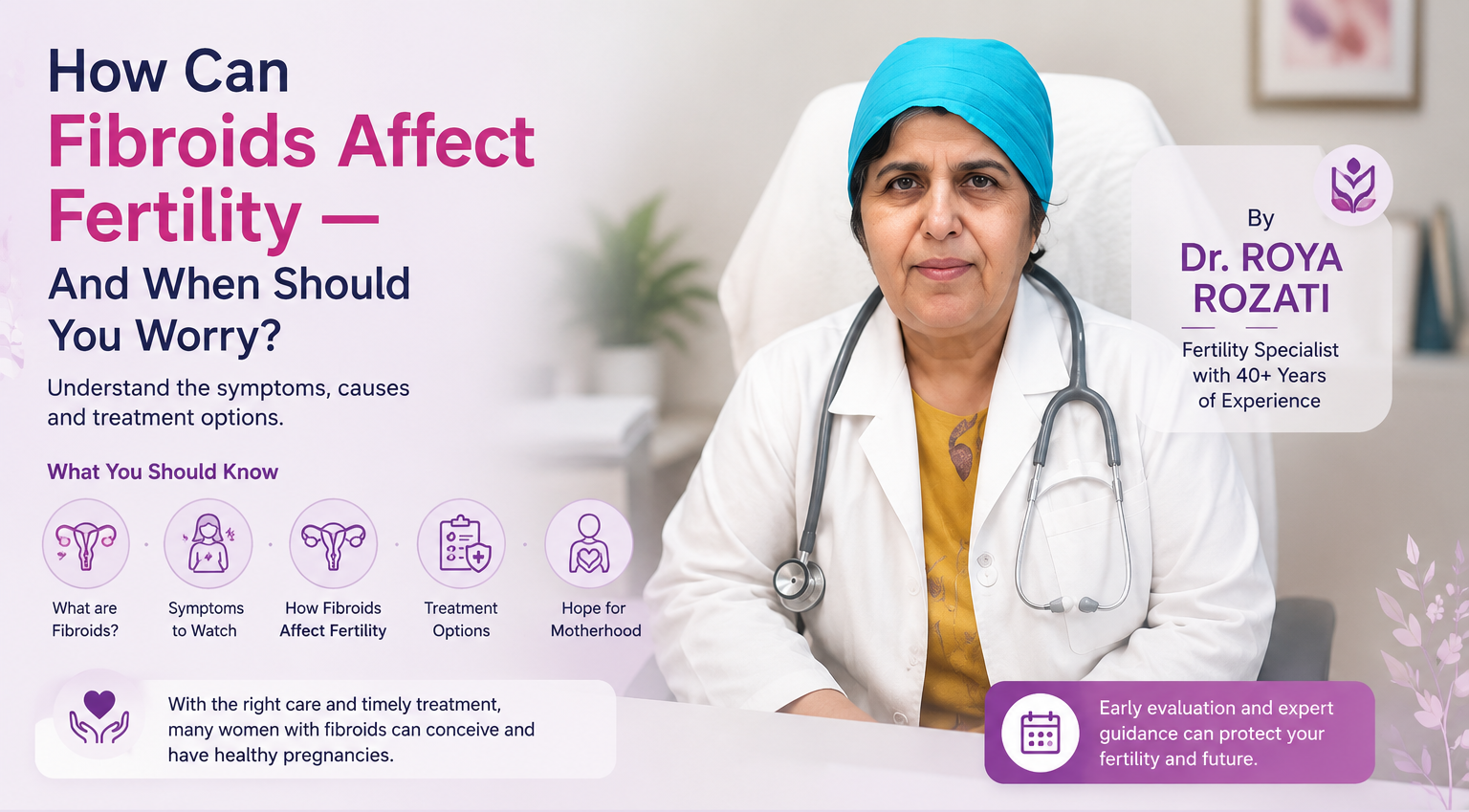
Many women discover they have fibroids during a routine scan or while trying to conceive. Naturally, the first question they ask is:
“Are fibroids dangerous?”
In most cases, fibroids are non-cancerous growths that develop in or around the uterus. They are very common, especially in women between the ages of 30 and 45. Many women may have fibroids without even knowing it.
Some fibroids are small and cause no symptoms at all. Others may lead to heavy bleeding, painful periods, pelvic pressure, back pain, frequent urination, or difficulty becoming pregnant.
Whether fibroids affect fertility depends largely on their size and location.
Fibroids growing inside the cavity of the uterus can sometimes interfere with implantation of the embryo or increase the risk of miscarriage. Larger fibroids may also distort the shape of the uterus or affect blood flow needed for a healthy pregnancy.
However, it is important not to panic. Not every fibroid requires surgery or aggressive treatment. Many women with fibroids conceive naturally and have healthy pregnancies.
Treatment depends on several factors including the woman’s age, symptoms, fertility goals, size of the fibroids, and their location.
In some cases, simple observation and monitoring may be enough. In other situations, medications or minimally invasive procedures may be advised.
Today, medical science offers several effective ways to manage fibroids while preserving fertility whenever possible. The key is proper evaluation and individualized care.
One mistake many women make is ignoring symptoms like heavy bleeding or severe pelvic pain for years. Early diagnosis allows doctors to guide treatment more safely and effectively before complications develop.
If you have fibroids and are planning pregnancy, do not rely only on internet advice or fear-based information.
A proper fertility evaluation can help determine whether the fibroids are actually affecting your reproductive health.
With timely medical expertise, many women with fibroids can successfully protect their fertility and move toward healthy motherhood.
To book an appointment with Dr. Roya Rozati, you can call or message MHRT Hospital on +91 98491 61421.
MHRT Hospital – Banjara Hills
8-2-120, H, 86/1A, Road Number 3, Banjara Hills,
Hyderabad, Telangana 500034
MHRT Hospital – Shivrampally
Pillar No. 274, Prashant Colony,
Beside Raj Marble Granite, Shivrampally, Hyderabad, Telangana
