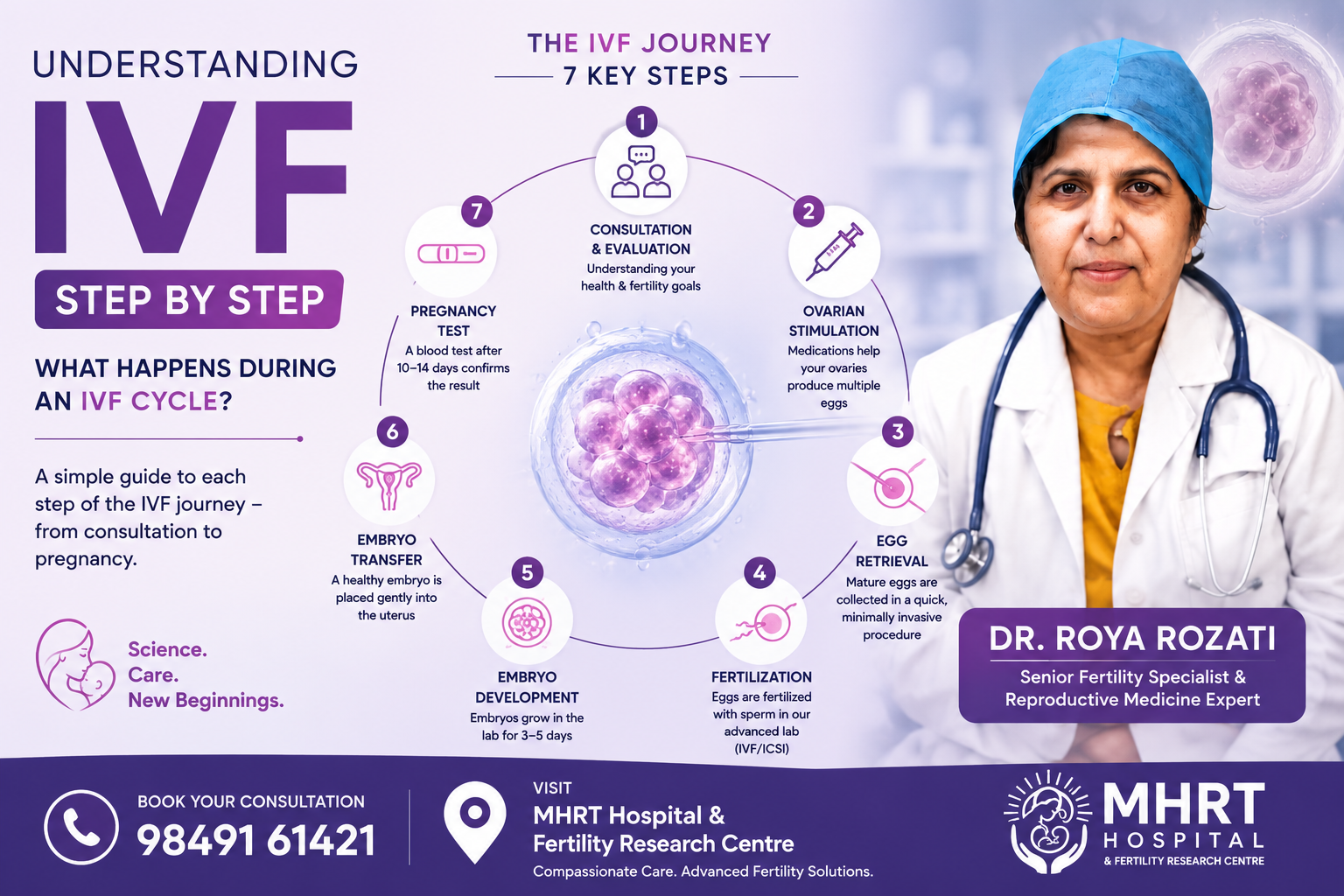
If your doctor has recommended In Vitro Fertilization (IVF), it’s natural to have questions. One of the most common is: “What actually happens during an IVF cycle?”
IVF is a carefully planned fertility treatment in which fertilization takes place in a specialized laboratory before an embryo is transferred into the uterus. Every couple’s treatment plan is personalized, but the overall process generally follows these key steps.
Step 1: Initial Fertility Consultation
Your journey begins with a detailed consultation. Your fertility specialist reviews your medical history, previous pregnancies, menstrual cycle, lifestyle, and any prior fertility treatments. Blood tests, ultrasound scans, and semen analysis help identify the underlying cause of infertility and determine the most appropriate treatment plan.
Step 2: Ovarian Stimulation
Instead of releasing a single egg, the ovaries are stimulated with fertility medications to produce multiple mature eggs. Throughout this phase, ultrasound scans and blood tests monitor follicle growth to ensure the ovaries respond safely and effectively.
Step 3: Egg Retrieval
Once the eggs are mature, they are collected through a minimally invasive procedure performed under sedation. Most patients return home the same day and recover quickly.
Step 4: Fertilization in the IVF Laboratory
The collected eggs are combined with sperm in a highly controlled embryology laboratory. In some cases, Intracytoplasmic Sperm Injection (ICSI) is used, where a single healthy sperm is injected directly into an egg to improve fertilization in selected cases.
Step 5: Embryo Development
The fertilized eggs develop into embryos over several days. During this period, embryologists carefully monitor their growth and select the healthiest embryo for transfer based on established laboratory and clinical criteria.
Step 6: Embryo Transfer
A selected embryo is gently placed into the uterus using a thin catheter. This is usually a quick, painless outpatient procedure that does not require surgery or general anesthesia.
Step 7: The Pregnancy Test
Around 10 to 14 days after embryo transfer, a blood test confirms whether implantation has occurred and pregnancy has been achieved.
Every IVF Journey Is Unique
Although these are the general steps, no two IVF journeys are exactly alike. Age, ovarian reserve, sperm quality, underlying medical conditions, and previous fertility history all influence the treatment approach.
At MHRT Hospital & Fertility Research Centre, every IVF plan is individualized to provide the safest, most effective, and evidence-based care possible.
Frequently Asked Questions
How long does one IVF cycle take?
A complete IVF cycle typically takes 4 to 6 weeks, although the exact duration varies depending on the treatment protocol.
Is egg retrieval painful?
Egg retrieval is performed under sedation, and most patients experience only mild discomfort afterward.
Can I return to work during IVF treatment?
Many patients continue their normal daily activities, although your fertility specialist may recommend temporary adjustments during certain stages of treatment.
Is embryo transfer painful?
No. Embryo transfer is generally painless and is performed without anesthesia in most cases.
Take the First Step Towards Parenthood
If you’re considering IVF or have been trying to conceive without success, the first step is a comprehensive fertility evaluation.
Consult Dr. Roya Rozati, a leading fertility specialist with decades of experience in reproductive medicine and assisted reproductive technologies.
📞 Call: 98491 61421
🏥 Visit:
MHRT Hospital & Fertility Research Centre
Book your in-person consultation today and receive a personalized fertility treatment plan tailored to your needs.